
No waiting
Customers reach an expert in seconds.
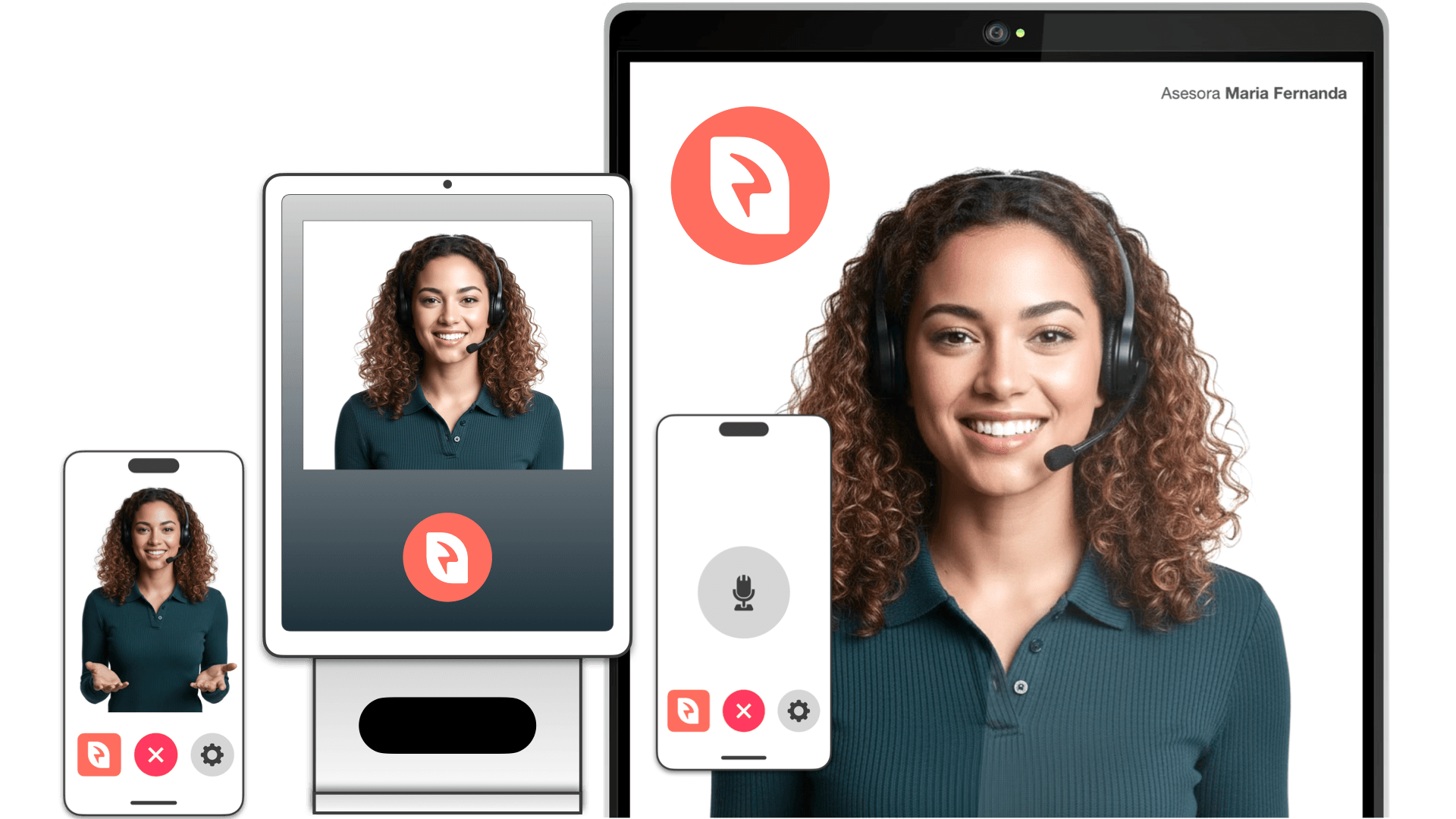
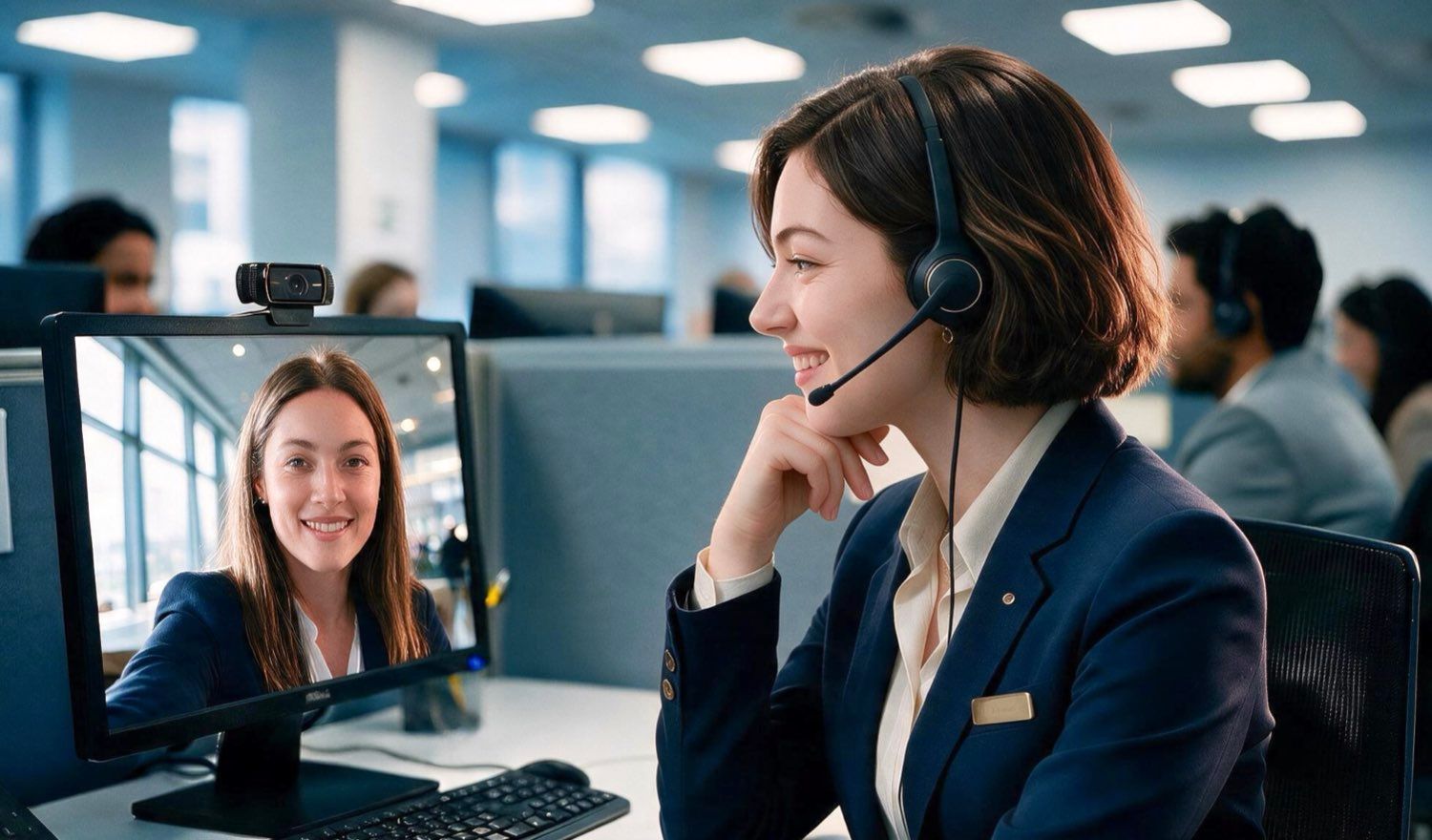
Your service teams. Your best experts. At any location. In seconds.
Customers reach an expert in seconds.
Experts serve from wherever they are.
The right available specialist at every location.
Every location connected, no extra local staff needed.
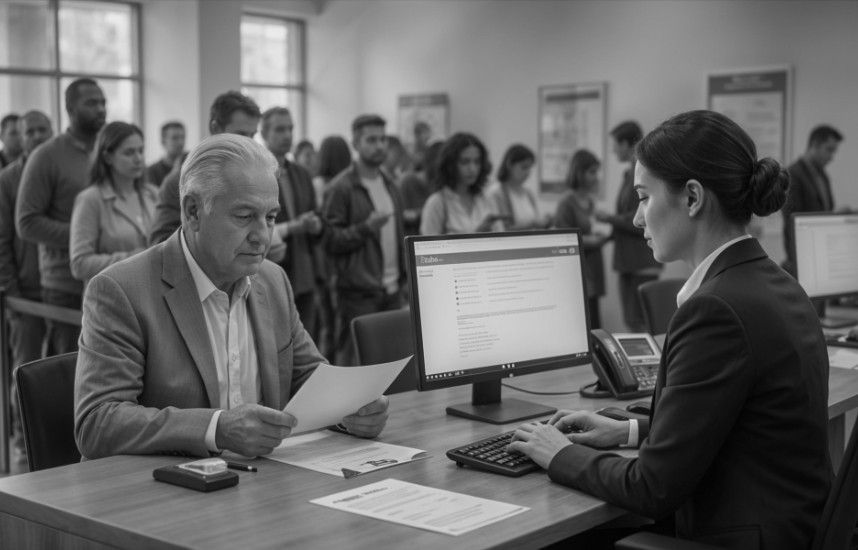
At peak hour the line reaches the door; two hours later the office is empty. Share capacity across sites and serve demand where it appears, without sizing every point for its worst moment.
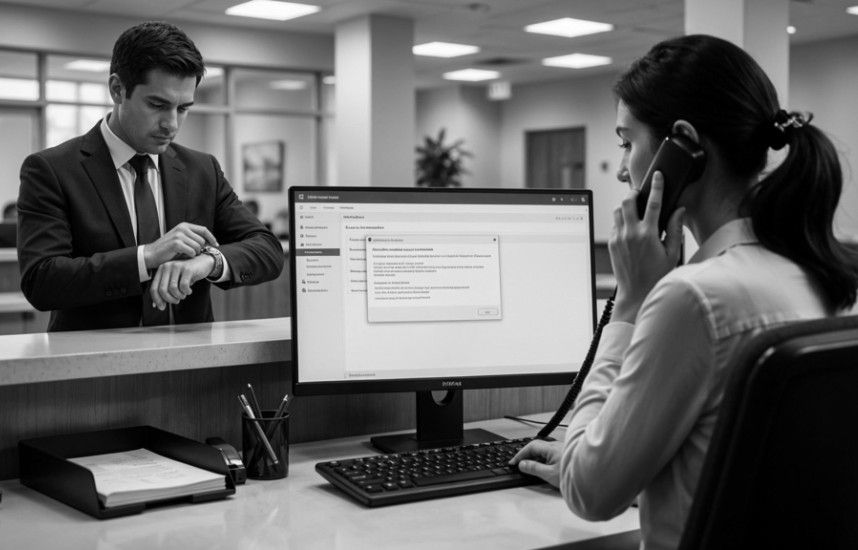
The customer is ready to decide, but the person who can resolve it isn't there. The specialist appears on screen and the process continues, without sending the customer to another office or another day.

Bot, chat, phone and branch run as separate conversations. When the case gets complicated, the customer moves to a person on video who knows everything that came before, and resolves it.

Processes that die in a form or an app, and hours when the point is closed. With a person on video, the case gets resolved instead of abandoned.
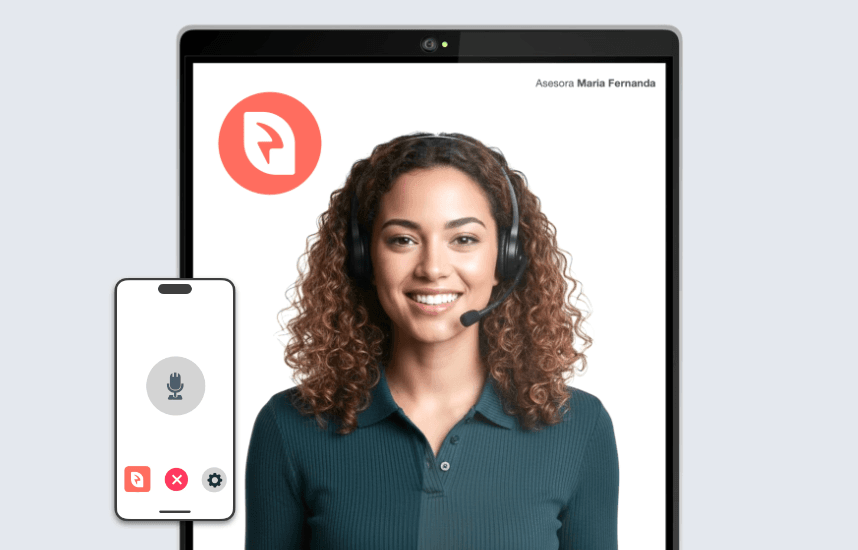
Your expert, life-size, in the hall, the lobby, the branch or the storefront. Serves when someone needs it and promotes your offer when no one is connected.
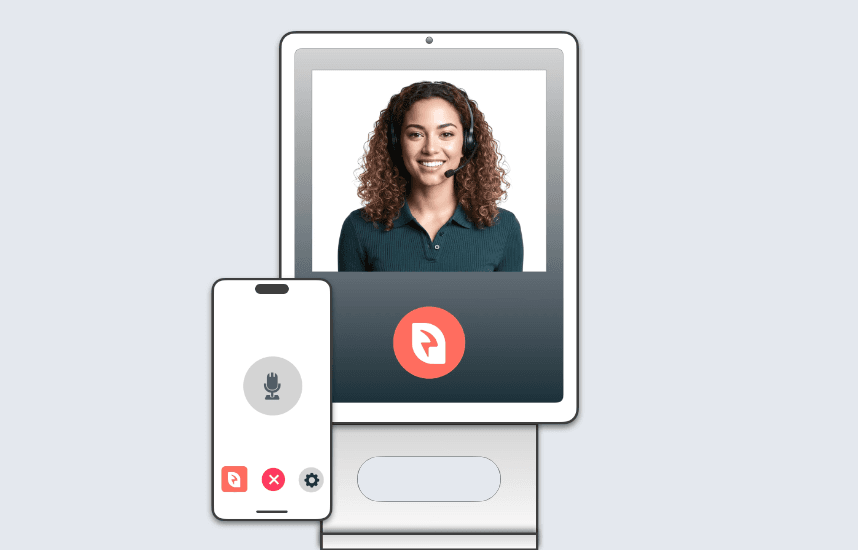
At reception, in the exam room or at the advisor's desk. Your staff bring in the specialist with one tap and resolve in the same visit what used to be pushed to another channel.
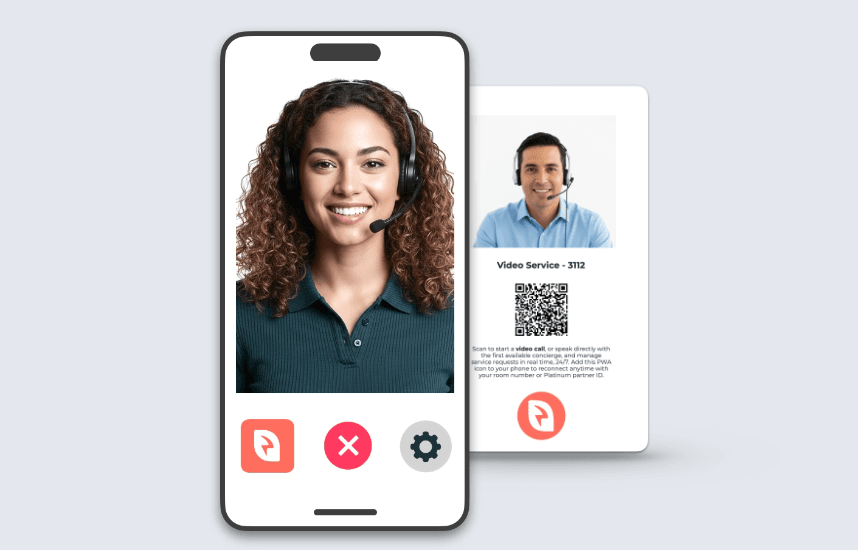
A QR code on screen, a sticker or your website turns the customer's phone into a direct line to your team, on site and after they leave.
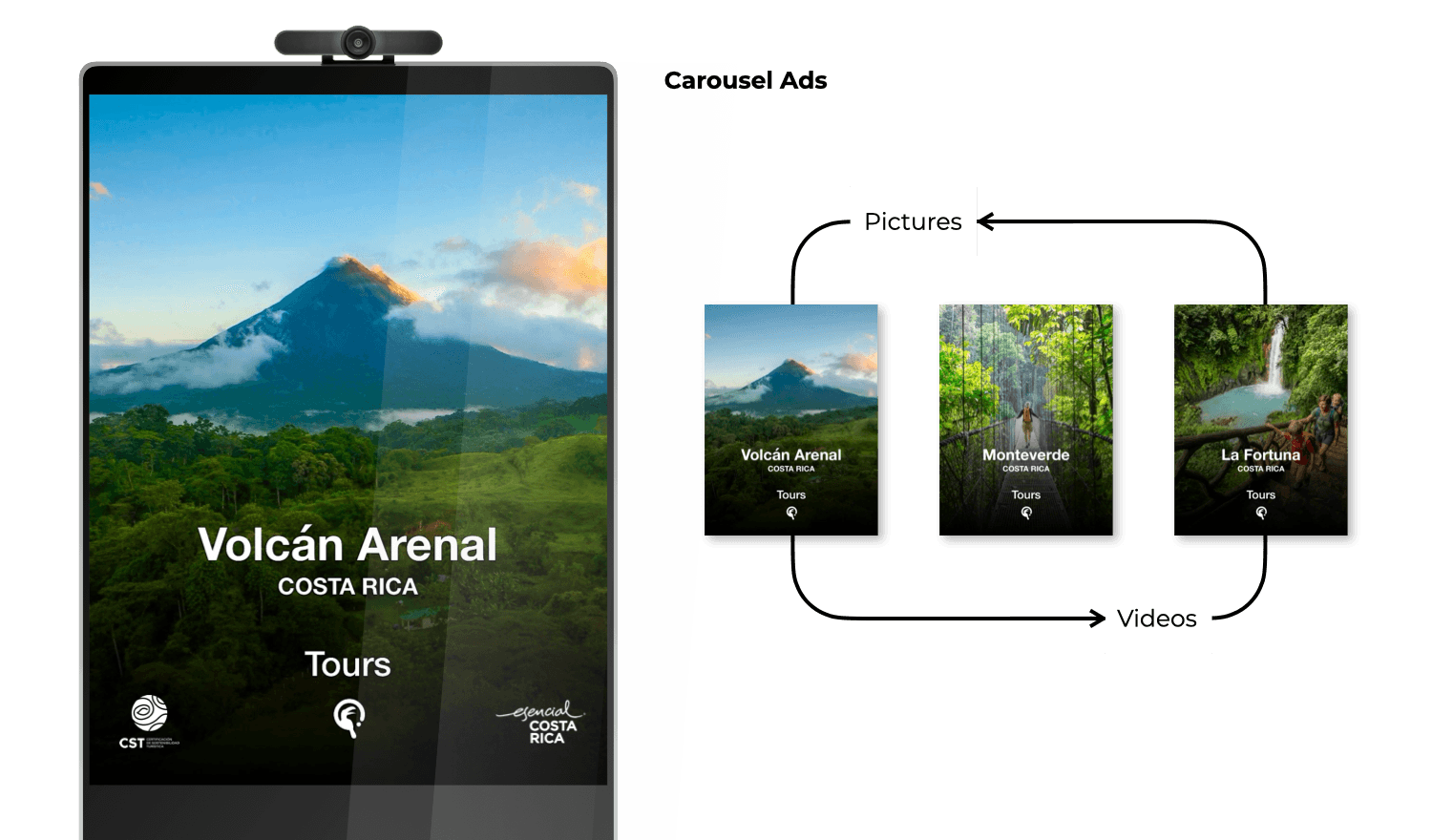
When no one is connected, the screen keeps working: campaigns and content tailored to each point, managed from one place, that take customers from looking to asking.
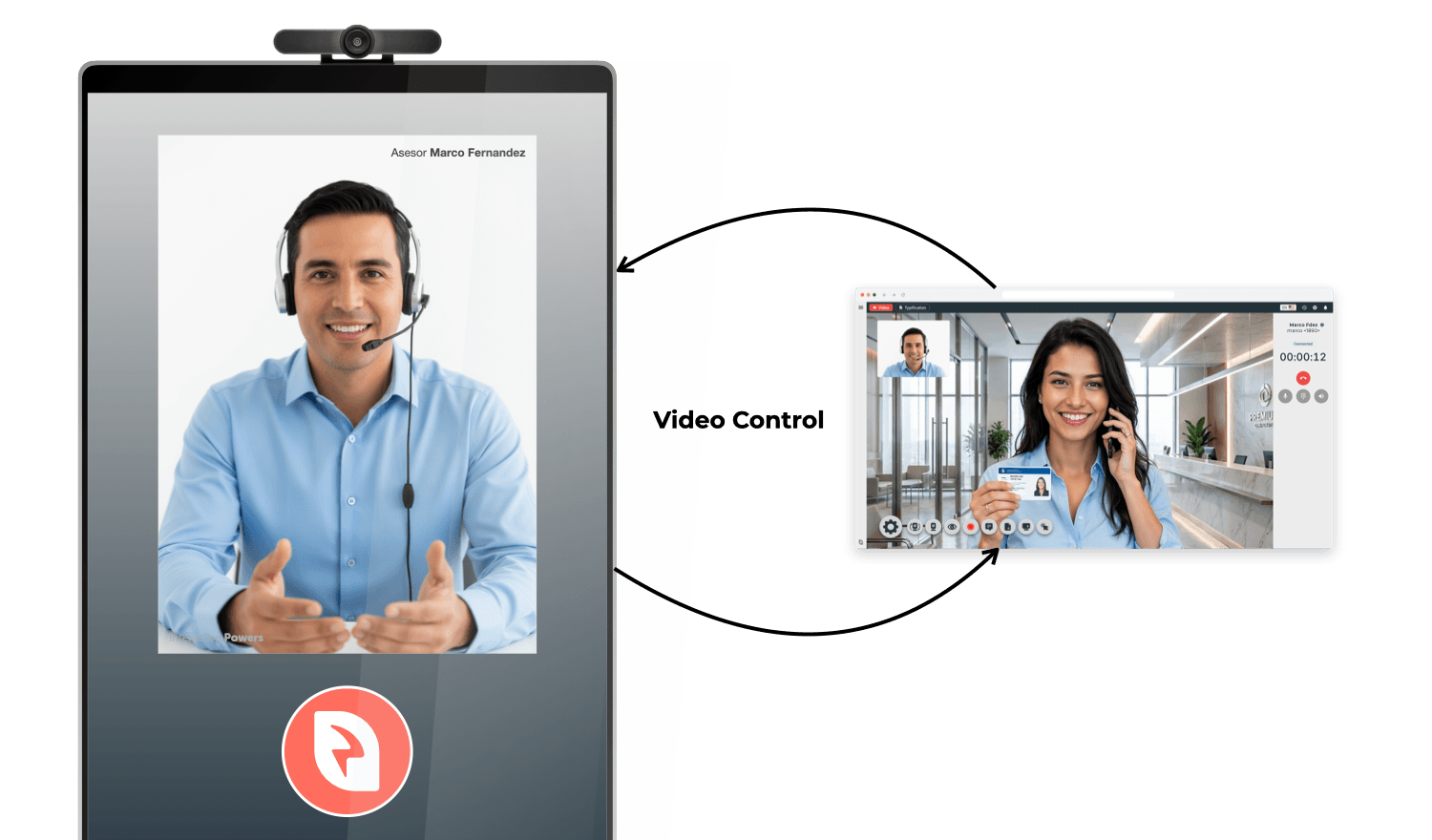
Customers identify themselves once, in the most convenient way. Your team knows who they are and what they need from the first second, and that context stays with them through to the close.
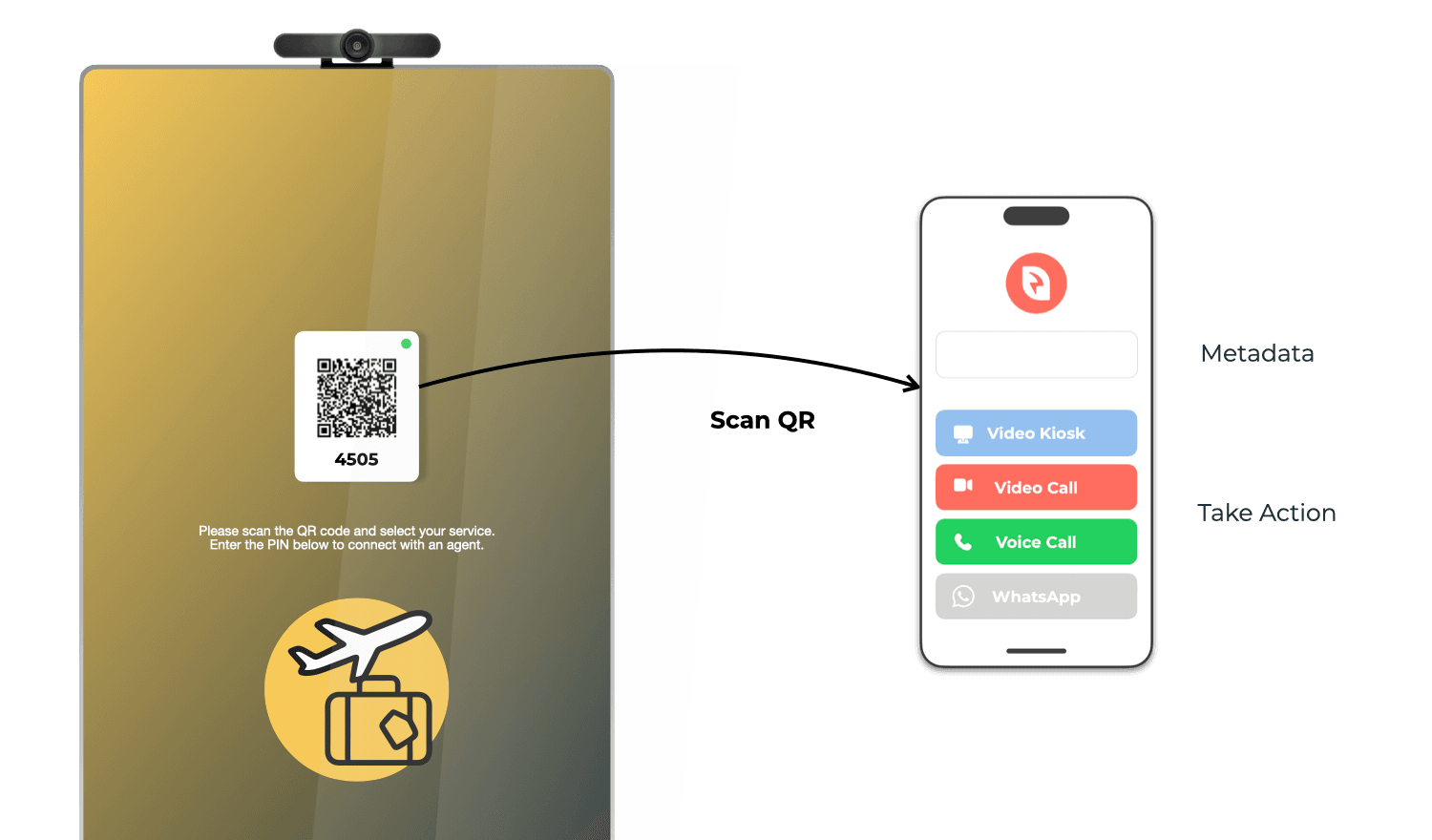
Customers choose what they want to do: buy, book, ask, complete a process or talk to a specialist. Each service reaches its own team, with its own rules and branding, without a line.
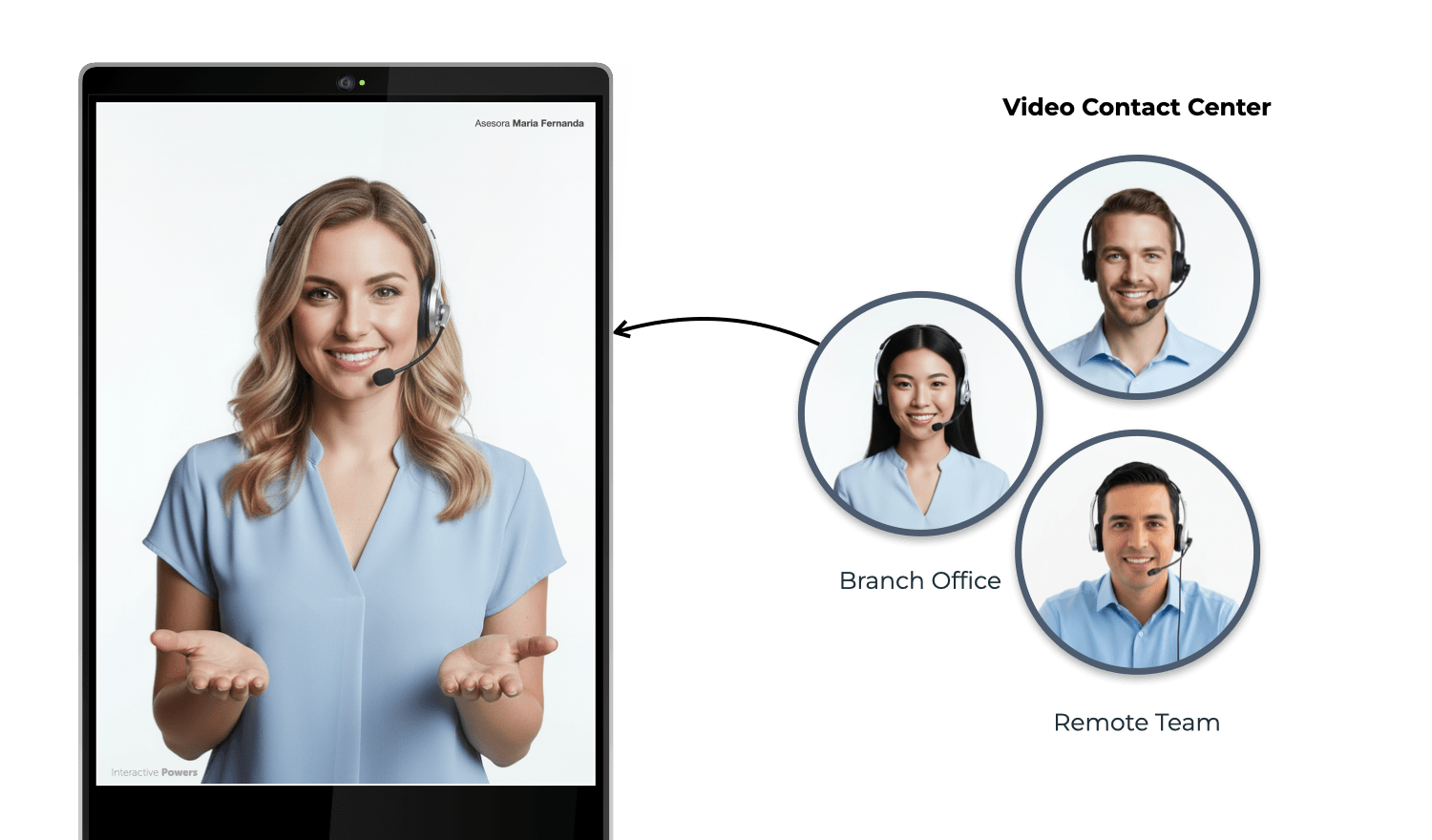
SPLIT technology routes each interaction in real time to the right available expert, whether at another site, in the Contact Center or at a Remote Desk.
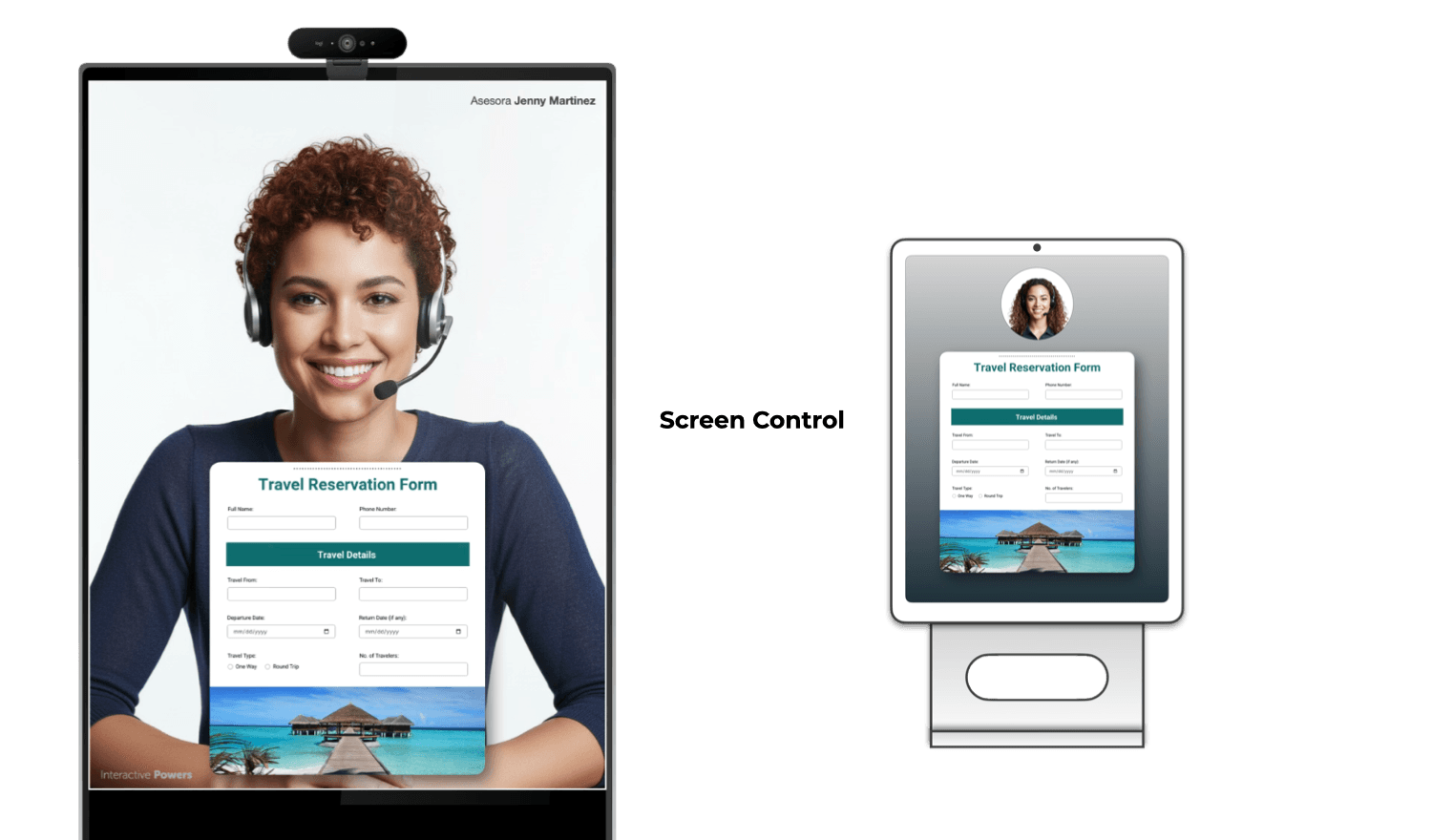
Documents, links, screen sharing and the phone's camera turn the conversation into real work: the expert works on the customer's actual case, not on a description of it.
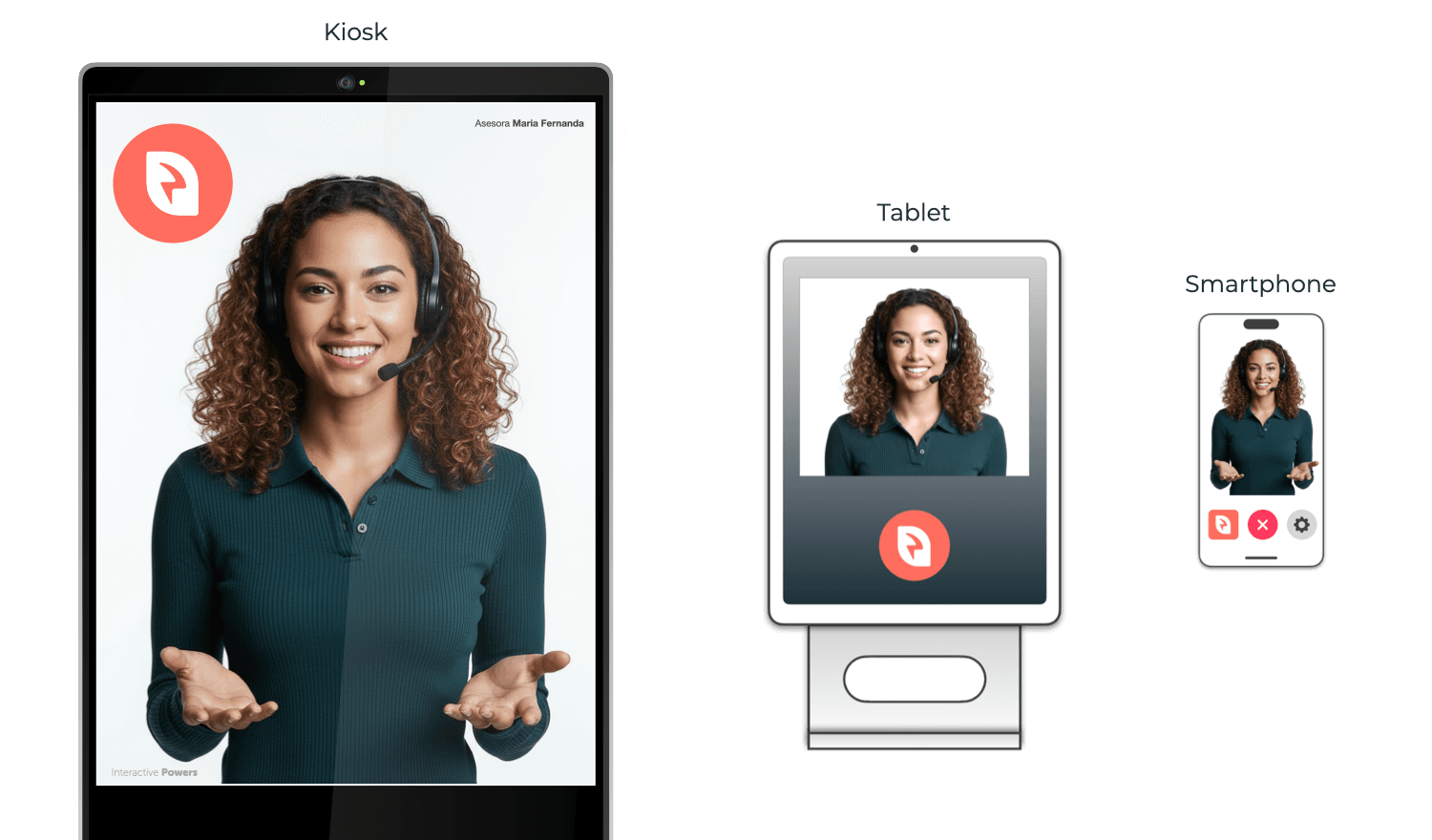
What can be resolved is resolved on the spot. What needs more time continues on the phone, with a new connection or with another specialist, without losing context.
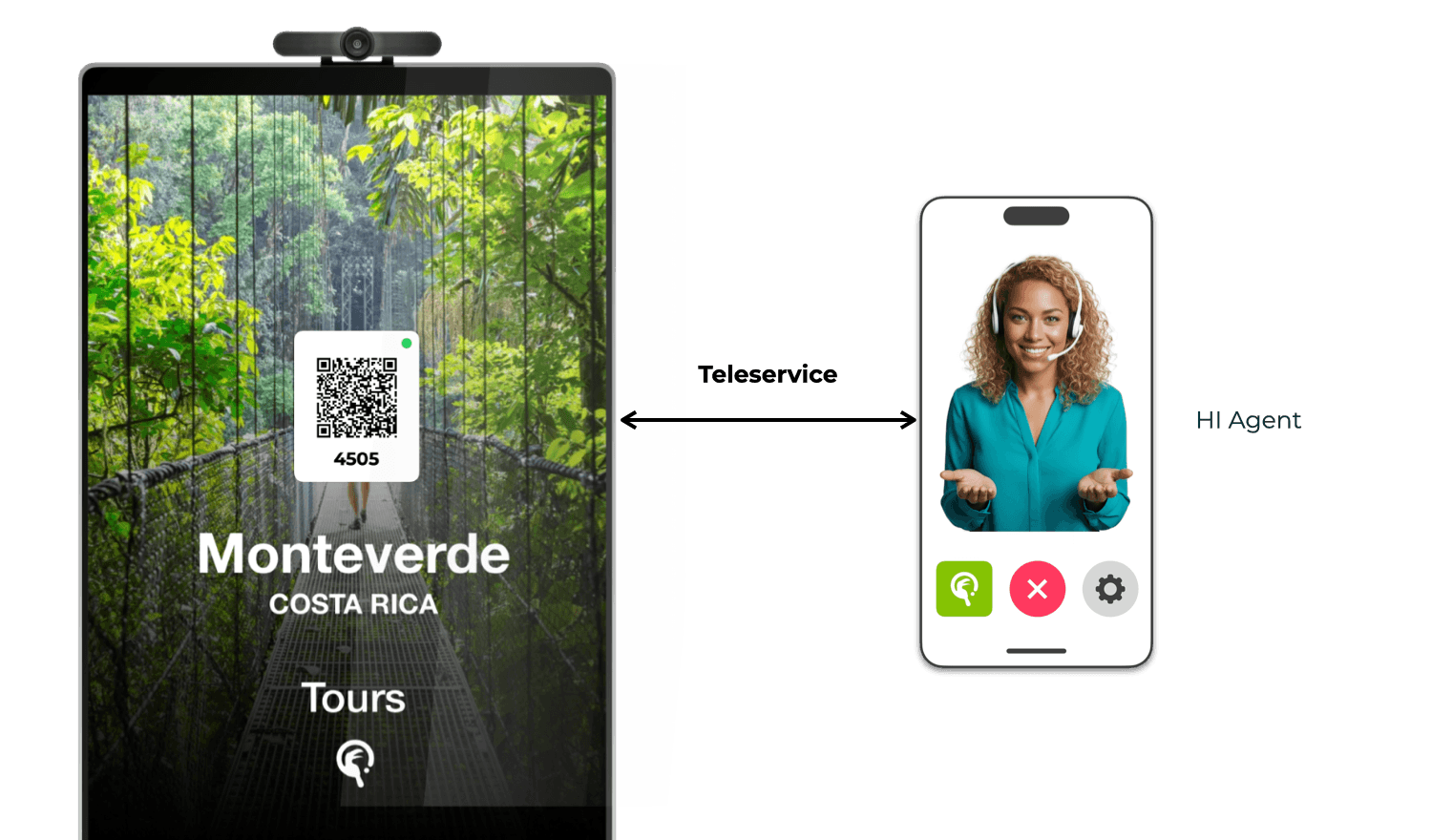
The decision is made while interest is alive. With the expert right there to clarify terms, the sale closes on site instead of being pushed to another visit.
Life-size video on the point's screen; the audio, privately, through the customer's phone.

The video call moves to the phone when the customer needs to leave.
Digital voice from the phone for those who prefer to talk without a camera.
Follow-up, appointments, payments and continuity when the process requires it.
Your catalog, eCommerce, web chat, bookings or forms, accessible from the point.
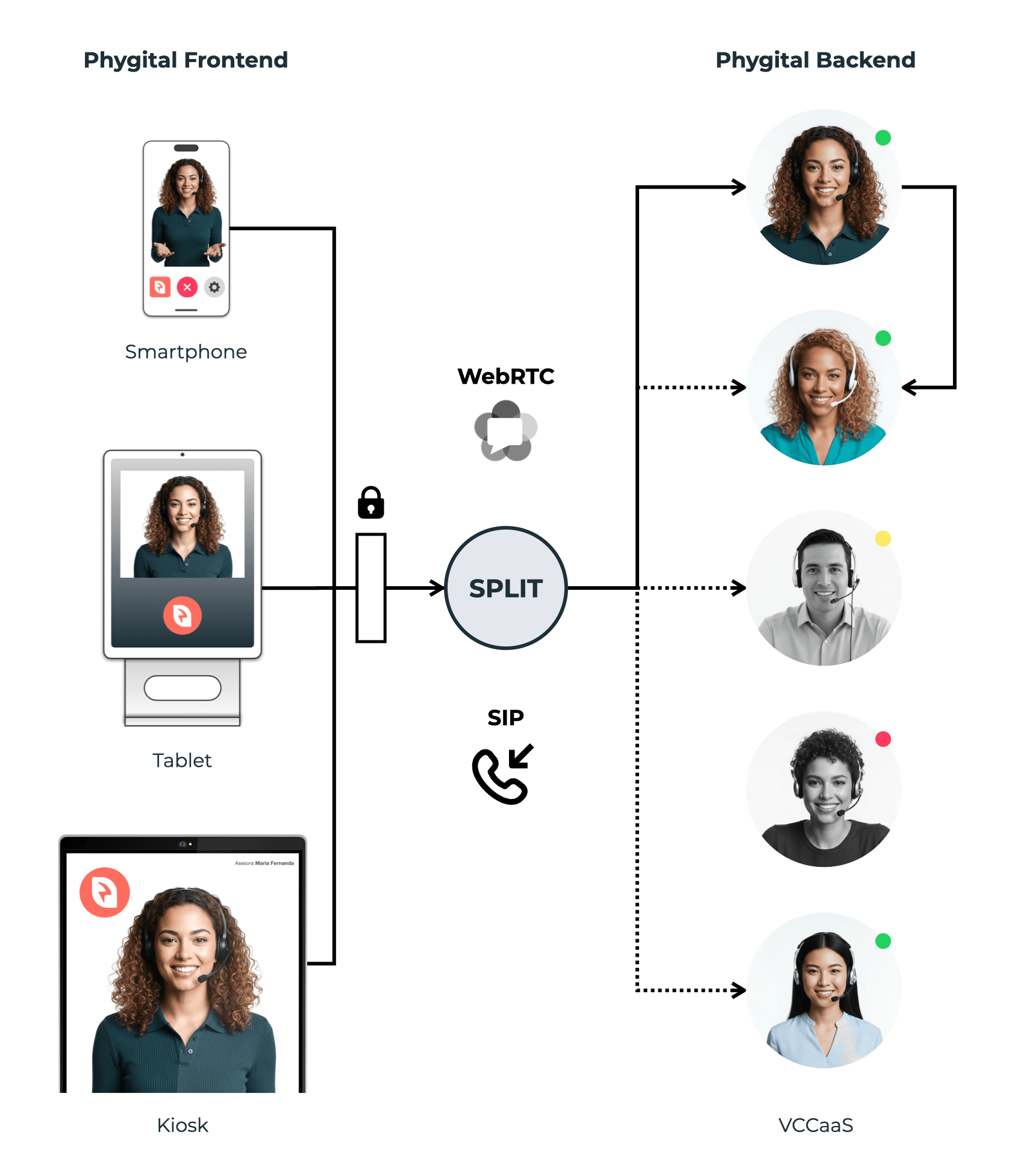
The screen is just the access point; the value is behind it. A single network of experts shares capacity and handles inquiries from all your points with SPLIT multimodal technology.
 Every inquiry reaches the right, available specialist.One site's capacity serves another site's demand.Agents in a branch, the Contact Center or at a remote desk.If the interaction drops, the customer keeps their priority.No waiting, no friction, no apps.
Know-how no longer depends on where someone sits. The head-office specialist also serves the points that don't have that profile.

Video joins the operation you already run. Your Contact Center, in-house or BPO, serves the physical points with its queues, shifts and supervision.

Capacity where and when it's needed: experts working from home, another city or another country to cover hours, languages or specialties.
Capacity is no longer tied to one site: the same team serves every point.
Idle hours at one point become useful service at another. You pay for capacity that works, not capacity that waits.
Extend hours and services with the teams you already have, in another shift or another time zone.
Extend your presence without replicating infrastructure: no premises, no build-out and no dedicated staff.
Their time goes to customers, not to traveling between sites.
Off-the-shelf kiosks and tablets, managed remotely and with no telecom carrier costs.
The specialist appears while interest is alive, and complex deals close in the same visit.
The conversation continues on the phone, with an appointment or through another channel. The customer never starts over.

Less waiting and fewer “come back another day”: the customer talks to someone who can resolve.
Wait time, duration, resolution and rating, by agent and by point, all centralized.
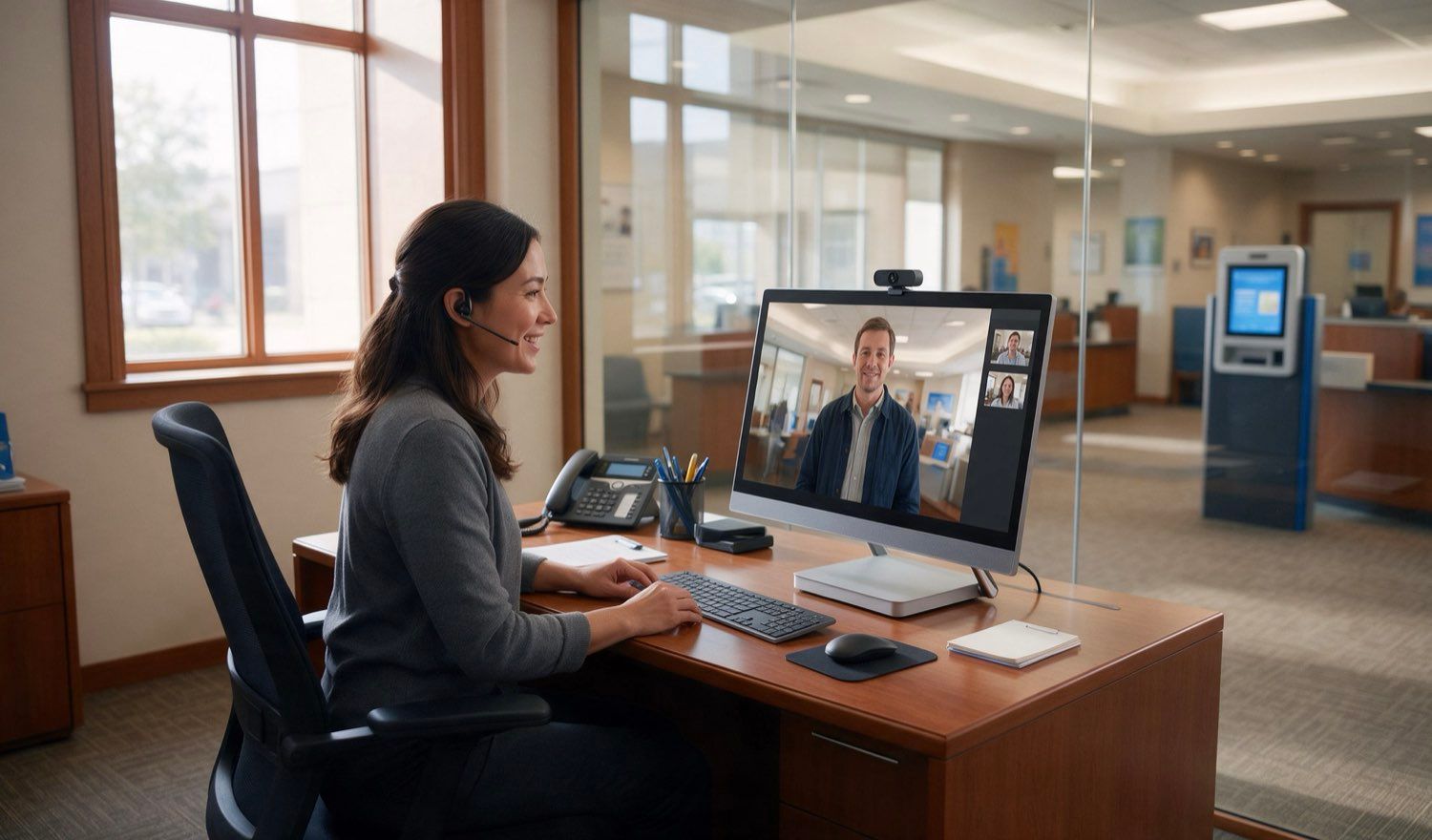
Banks, insurers, credit unions and lenders. The investment, mortgage or claims specialist joins the advisor's desk without booking another day; the Remote Desk absorbs peak hours and the storefront kiosk serves while the office is closed.
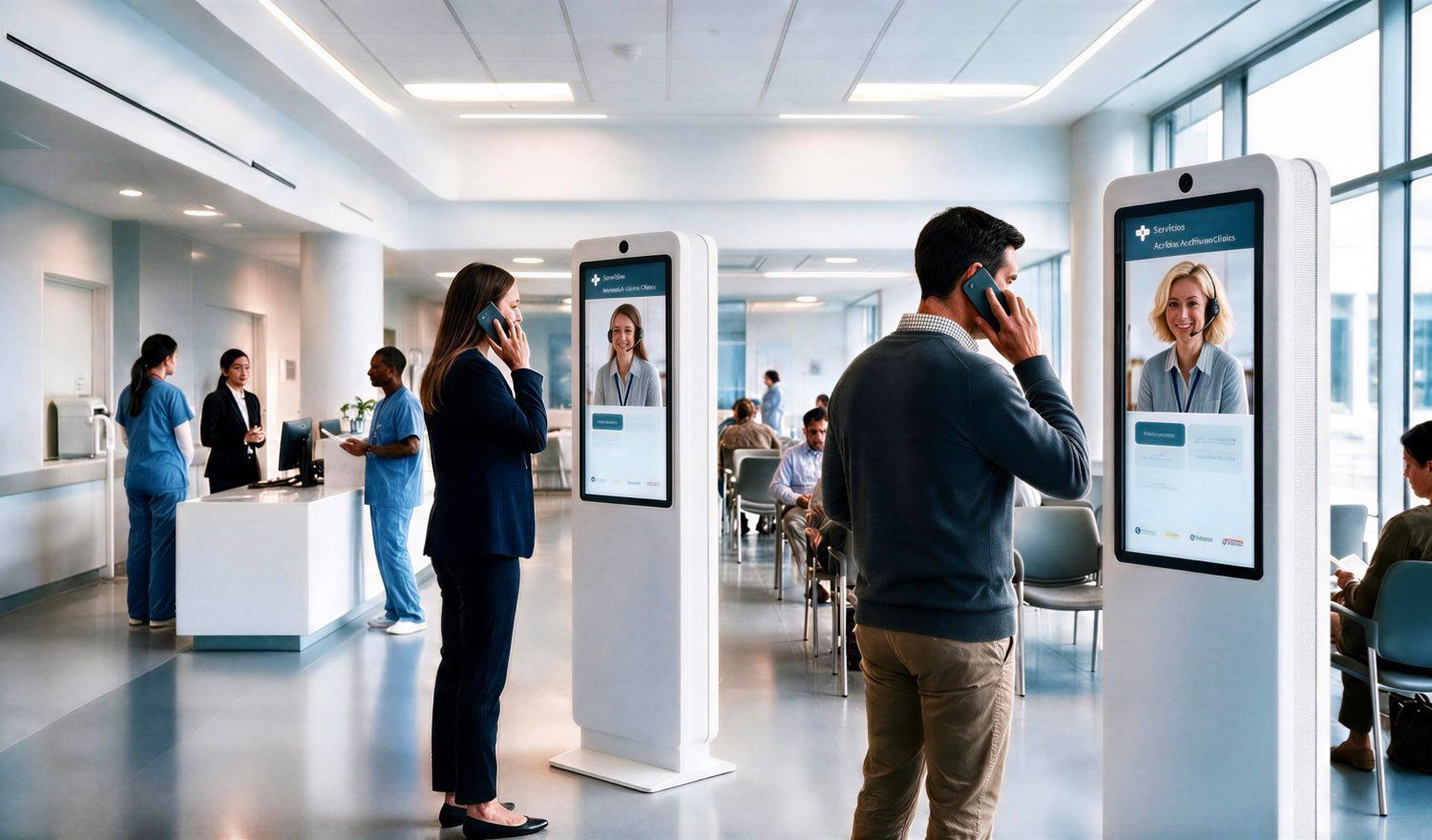
Clinics, hospitals, labs and pharmacies. The remote medical secretary handles admissions and appointments without lines and takes the load off reception; when needed, it transfers to the doctor by voice or video, after hours too.
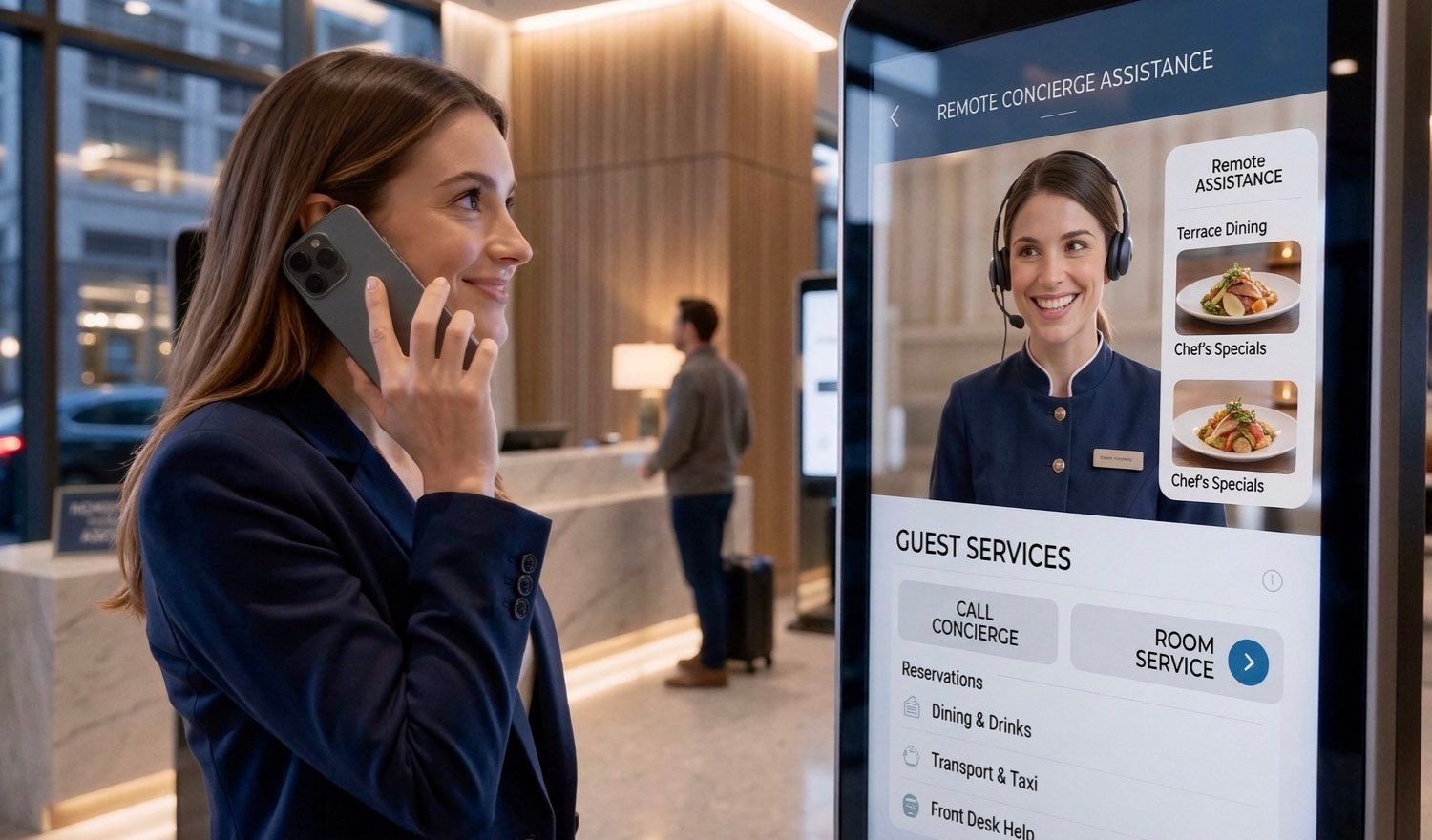
Hotels, resorts, airports and travel agencies. One remote concierge covers several lobbies or terminals, tours and transfers are sold at the kiosk with a real person, and the guest room connects to the front desk without a landline.
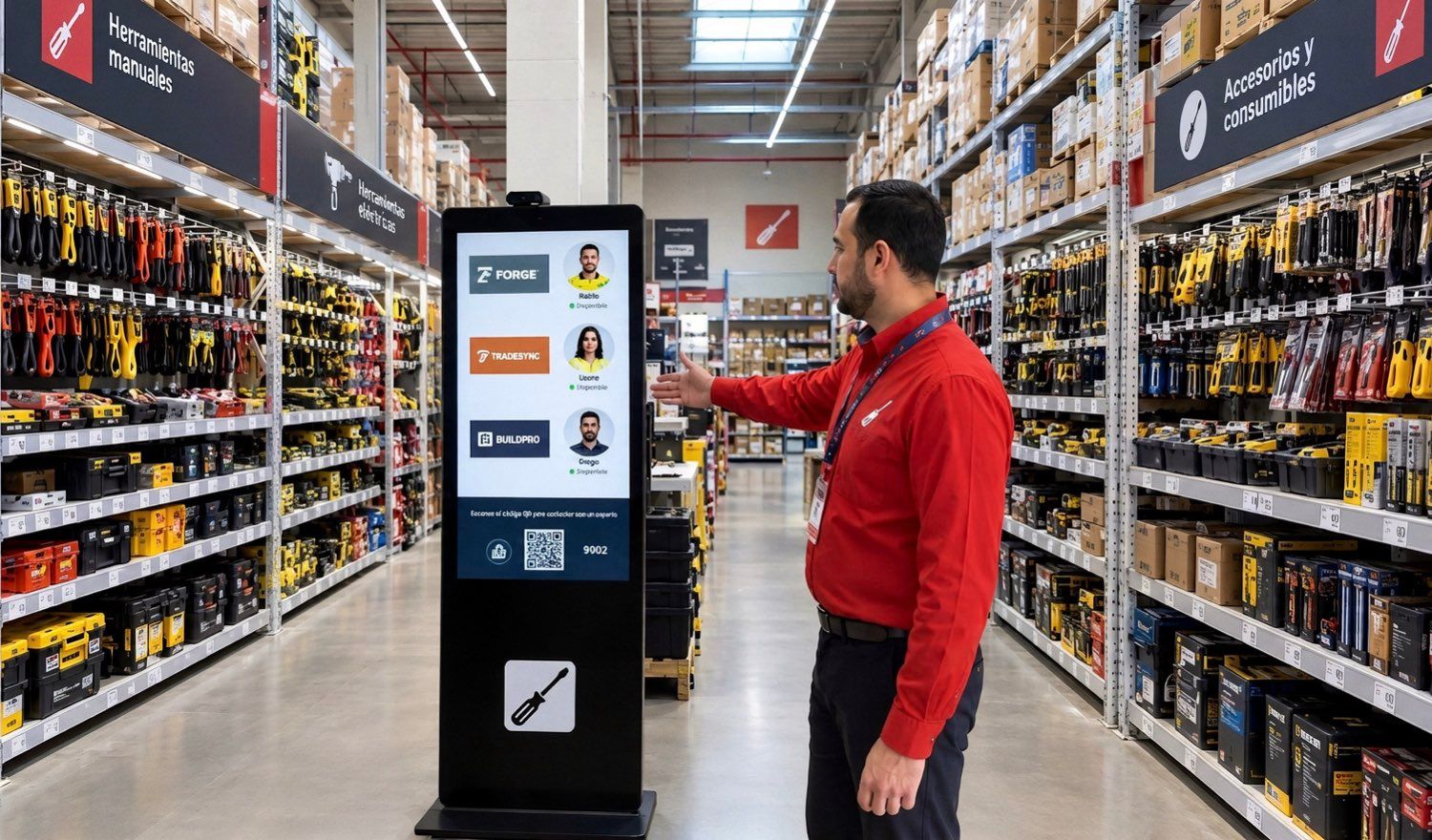
Specialty stores, big-box retailers, malls and showrooms. The product specialist serves several points at once and handles complex sales with human judgment: teleservice, not self-service.
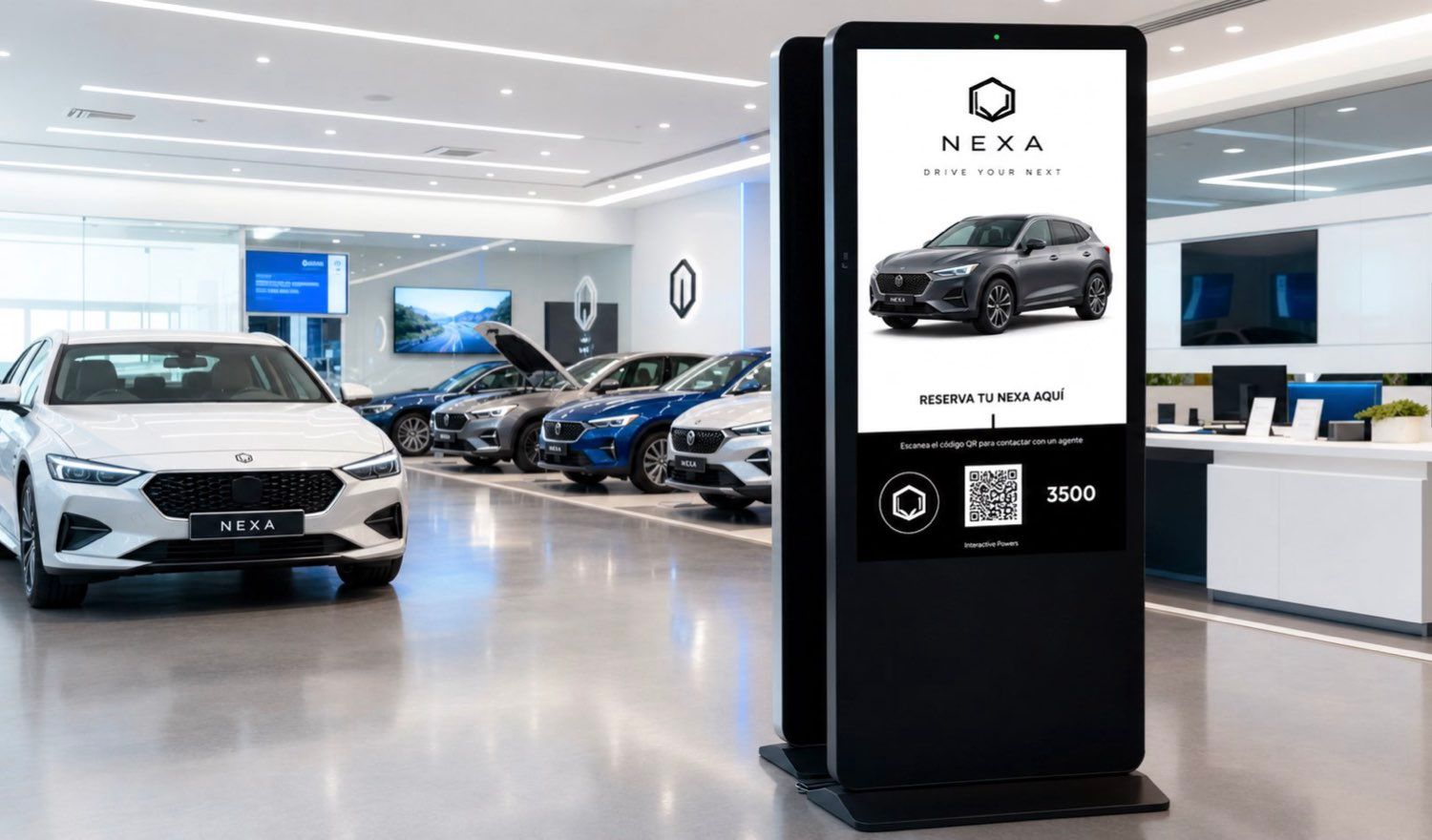
Dealerships, service centers and car rentals. The sales, financing or after-sales advisor serves by video on the showroom floor or on the customer's phone, even when the local advisor is busy.
Government agencies, citizen services, water, energy and telecommunications. A remote agent serves without an appointment, with sign language and Indigenous language interpreters, and the office keeps serving from the street after hours.
The local team keeps serving and brings in the remote expert when an inquiry needs a specialty that isn't on site.
A physical desk staffed from head office, another site or home. You adjust local capacity without moving anyone.
After hours or with the premises closed, the point stays connected to your remote team.
A virtual access point on the phone, with no app, to stay in touch and return to the service at any time.
Minimal customer effort: service in 0–3 minutes.
First-contact resolution, no handoffs.
Overall rating of service through the video channel.



Behind every screen: Video RTC, Web ACD, Smart IVR and Video REC.
Learn MoreA person from your team or your BPO. The customer sees them from the first moment: someone real, with empathy and the ability to resolve; not an avatar.
The interaction is recovered with priority and, depending on the flow, the customer can continue from their phone. Continuity is built into the operation itself.
They can talk by digital voice only or continue from their own phone. Each point offers different connection modes based on each user's preference.
Content, branding and configuration are managed remotely from Kiosk Manager. No development needed: the points run from day one.
The platform runs on AWS, with a local region option. The infrastructure provides its certifications (ISO 27001, SOC, PCI DSS), and Interactive Powers complies with GDPR and HIPAA. Files can stay in your own cloud.
In networks where expert know-how is unevenly distributed, with demand peaks and lulls, or with services that need human advice to be sold.
Where self-service already does the job or the service is purely transactional, with no need to advise, sell or support.
No. You start with one specific process, a few points and a remote team; you measure, then scale by point or by service until the process is optimized.
A real deployment already in operation, and a simulator that runs a full day at your service point. Proof first; then your scenario.
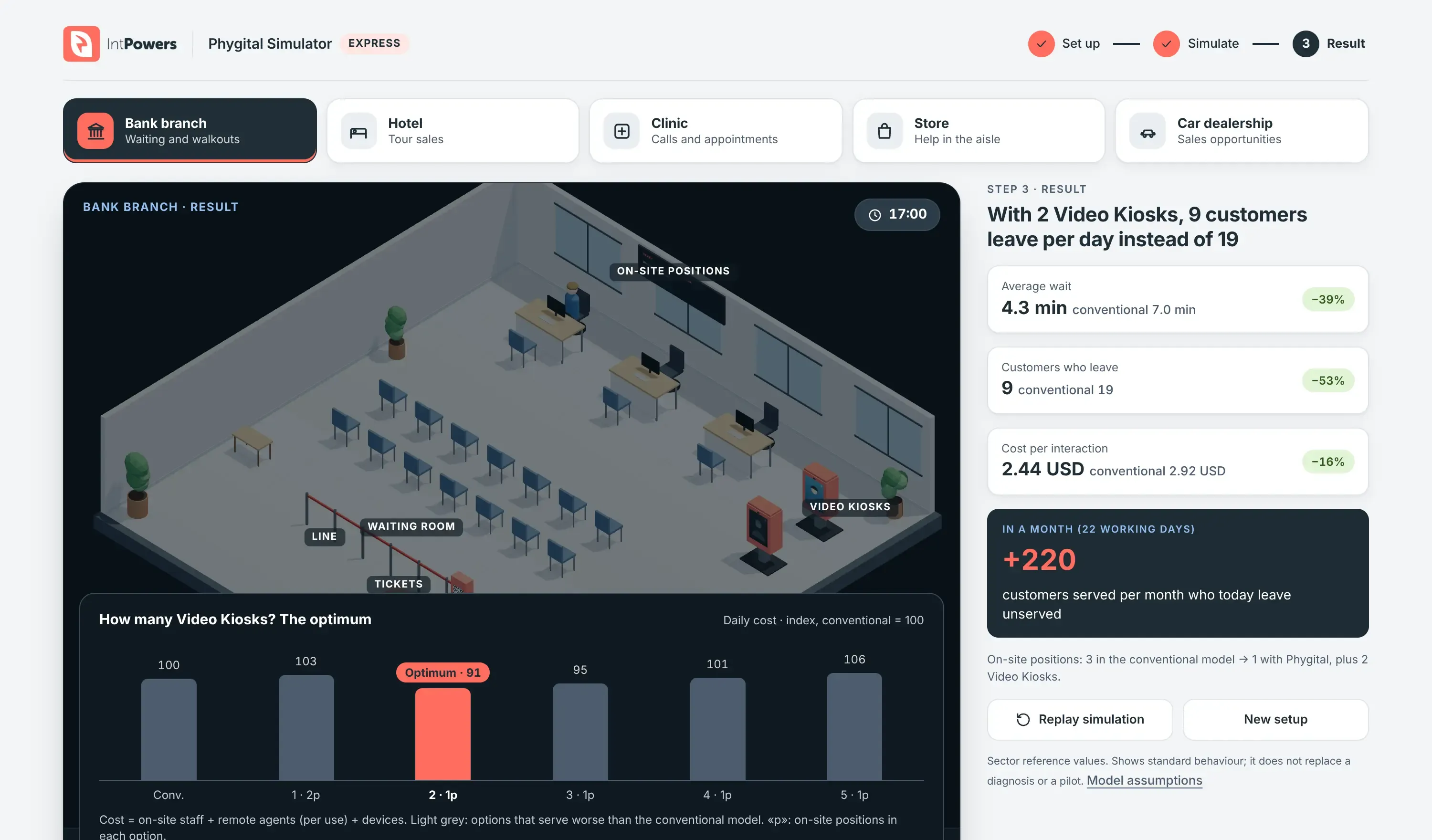
Pick your type of location —bank branch, hotel, clinic, store or car dealership— and compare a day under the conventional model with the same day using Video Kiosks and Video QR. Same customers, same hours: see who waits, who leaves and what each interaction costs.